

Would an AI CEO Do Better?
Why Your Leadership DNA Is Killing Product Transformation
An executive proudly announces the company’s commitment to customer-centricity at the all-hands, then kills a promising experiment in the afternoon because it “missed the quarterly forecast.” Eighteen months into their transformation, breakthroughs remain elusive.
The uncomfortable truth?
The biggest blocker isn’t methodology—it’s their own mental DNA.
This is a condensed and refined version of an essay originally published July 25th, 2025. The core argument has been sharpened and enhanced based on further discussions and exploration.
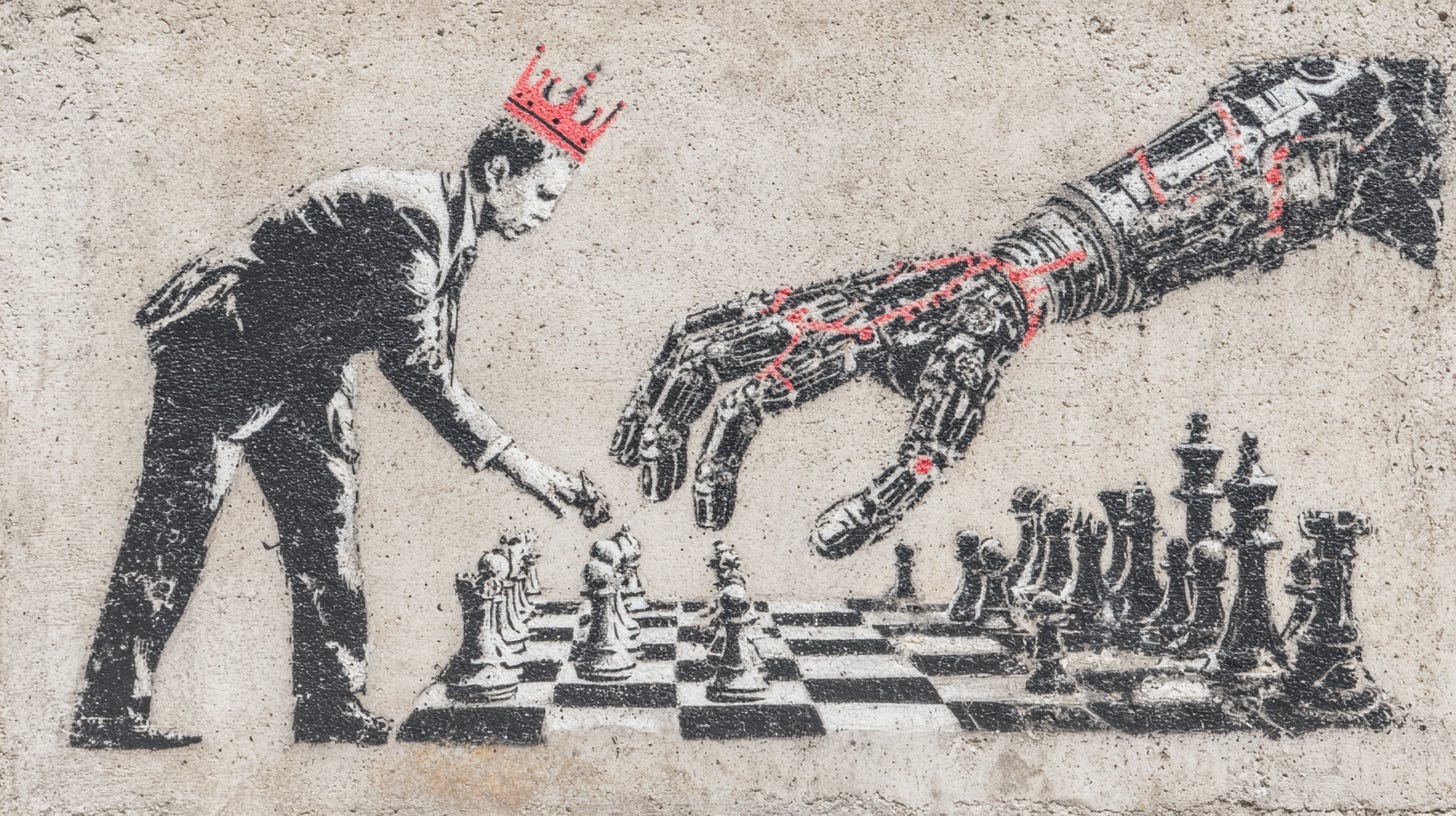
The Game Master’s Dilemma
As my friend Rune Ulvnes observes:
Executives risen through command-and-control are trapped by their own success. Their mental models—forged in project-based output optimization—actively resist the distributed judgment required for product work. Consider the executive who announces customer-centricity while evaluating teams on feature delivery velocity. Or the leadership team that mandates “empowered product teams” while requiring consensus approval for every significant decision.
The real expertise resides far from the executive suite: product managers conducting customer interviews, engineers observing feature usage, support teams hearing unfiltered feedback. Yet authority stays at the top. Knowledge and power live in different zip codes—the fundamental mismatch that distinguishes LegacyCo thinking (coordination and control) from NewCo thinking (distributed judgment and rapid learning).
The Reinforcement Paradox
Leadership rhetoric champions experimentation, yet organizational reflexes punish failure. Teams hear “Be bold!” followed immediately by “Why didn’t you hit your quarterly targets?” The game masters speak of new rules while rewarding those who play by the old ones.
This creates Transformation Theater—elaborate performances where teams speak the language of customer value while optimizing for internal metrics:
The Innovation Theater: Teams run design sprints and retrospectives while promotions still go to whoever delivers on their VP’s pet projects.
The Output Trap: Despite proclamations about learning, rewards flow to predictable delivery. The product manager who discovers the planned feature solves the wrong problem faces more scrutiny than one who ships that feature on schedule to zero adoption.
The Stupidity Trap: Even intelligent executives engage in what organizational scholars Mats Alvesson and André Spicer call “functional stupidity”—actively avoiding critical reflection that might threaten existing power structures, championing “empowerment” while preserving approval mechanisms.
The LegacyCo engine optimizes for the appearance of control: more meetings, more approvals, more documentation. NewCo organizations, by contrast, embed decision-making where expertise actually lives—enabling rapid adaptation without the theater.

The Mental Model Revolution
Genuine product transformation demands what Chris Argyris and Donald Schön called double-loop learning—questioning whether current approaches actually work. For senior leadership, this means examining and potentially discarding the very mental models that built their careers.
This shift demands redistributing decision-making authority based on proximity to value creation rather than organizational hierarchy. Leaders must accept that whoever best understands the customer problem should have power to act on that understanding. This requires moving from controlling decisions to enabling distributed expertise.
Instead of optimizing for resource utilization and schedule adherence, game masters must optimize for learning velocity and market responsiveness. Most challenging, they must surrender control in exchange for organizational responsiveness.
The CEO as Chief Mental Model Officer
The CEO’s role transforms from strategy architect to Chief Mental Model Officer. The game master must become the game’s chief designer. Their most vital responsibility is demonstrating daily—through every decision—that learning trumps “being right,” customer insights outweigh internal assumptions, and adapting based on evidence creates more value than executing predetermined plans.
When a CEO consistently asks “What did we learn about customer value?” rather than “Did we hit our targets?” they signal which thinking patterns the organization should develop. When they celebrate intelligent pivots based on market feedback, they reinforce the adaptability that product success requires. The transformation becomes less about implementing new processes and more about rewiring organizational reflexes.
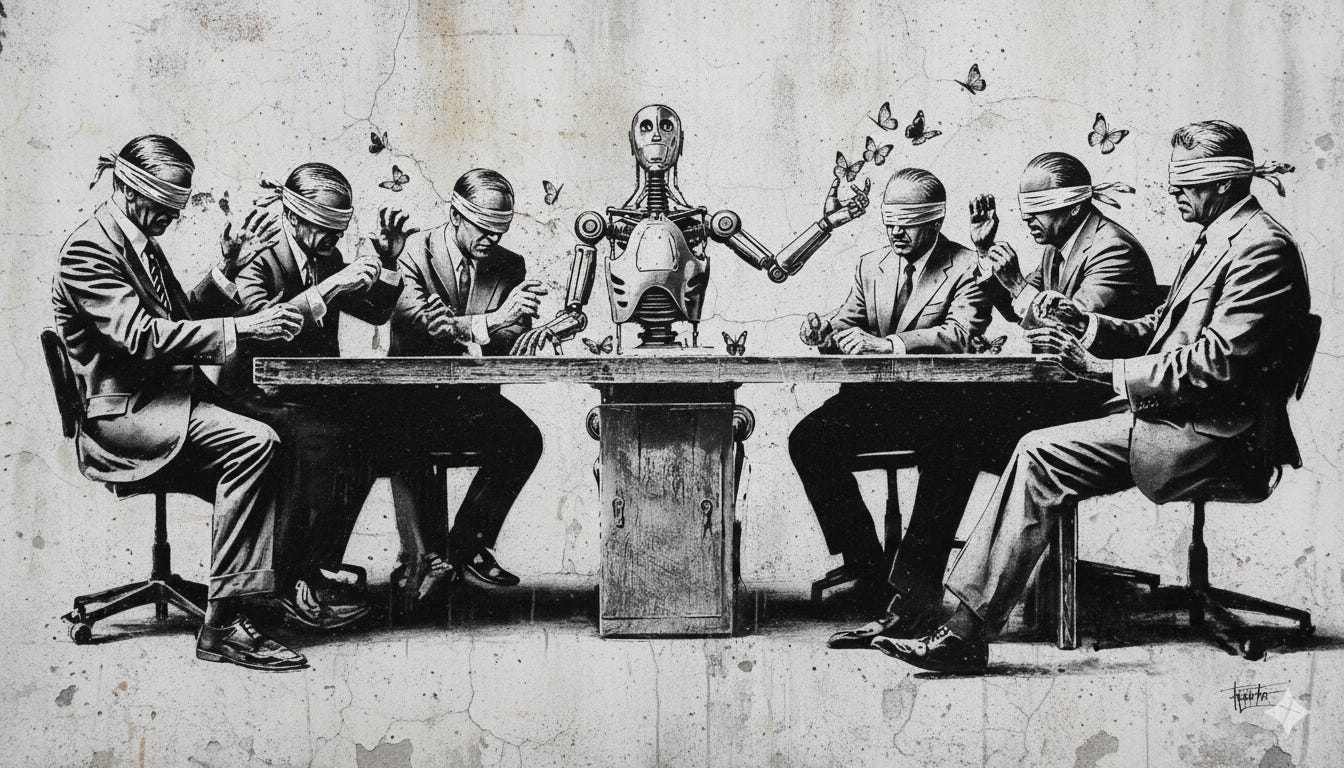
The AI Provocation
Here’s the uncomfortable question: Would an AI CEO handle your product transformation better than your current executive team?
Most executives recoil from this question. That discomfort is precisely the point.
Consider the cognitive advantages: an AI wouldn’t be psychologically invested in defending past decisions or preserving career-building mental models. It could process customer feedback without the ego involvement that makes human leaders resistant to contradictory data. It might naturally optimize for long-term customer value rather than short-term metrics protecting leadership credibility.
The provocation isn’t about replacing leaders—it’s about exposing the baggage we choose to carry.
If an AI can navigate product transformation better, it’s not because of superior intelligence—it’s because it lacks the mental models that currently constrain human leadership. When these frameworks can’t comprehend rapid, data-driven learning, they become the bottleneck for technology transformation itself.
The Transformation Imperative
The AI provocation clarifies what’s at stake. Most product transformations fail because organizations try to change the game while keeping the same game masters.
Real change requires cognitive courage: redistributing authority to wherever expertise lives, shifting metrics from schedule adherence to market impact, and accepting that mental model shifts take years—not quarters. If a PM best understands the customer, they—not a steering committee—should hold the budget. Customer-facing teams should modify features based on direct feedback. Domain experts should make architectural decisions. Success means moving the needle, not hitting the timeline.
While technical skills transfer quickly, the mental model shifts for authentic product leadership often take years. Organizations must develop current executives’ cognitive capabilities or bring in leadership already steeped in product thinking.
The game is already changing.
The only question is whether today’s leaders will architect the new game—or become relics of the old one.