

Stop Performing Transformation
Three Essays : A Data Leader's Journey from Cosplay to Trust
Organisations invest millions in “modern” data stacks, hire exceptional talent, and adopt the impeccable vocabulary of product thinking. Yet the promised returns remain elusive. Dashboards proliferate while decision quality stays flat. Teams speak fluently about “outcomes” while incentive systems reward “outputs”. The strategy deck describes a high-functioning future; Monday morning reveals a ticket-taking past.
This series examines why data transformations often produce organisational theatre rather than structural change—and what genuine progress actually requires.
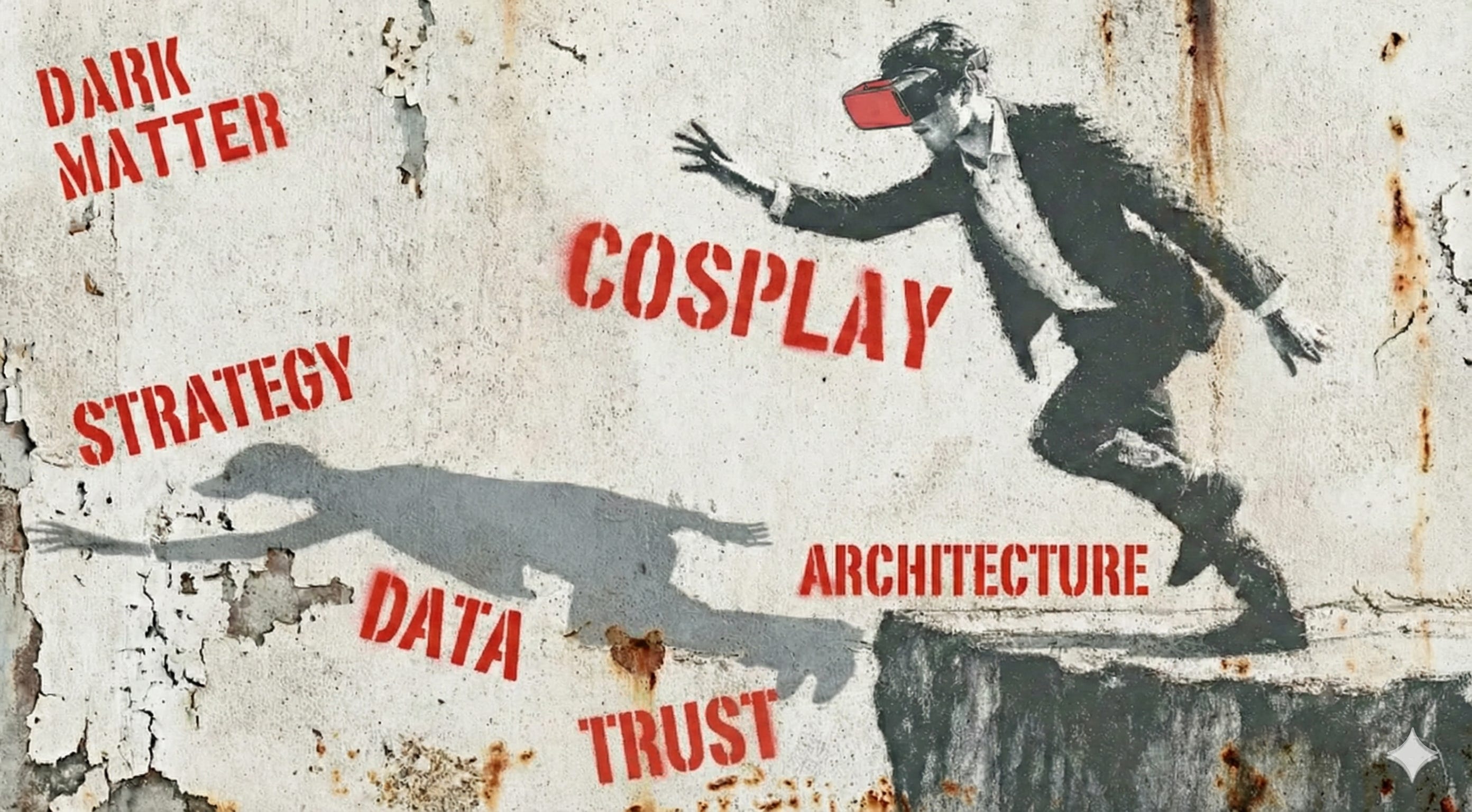
Drawing on John Cutler’s framework of acts and value-centricity, we explore why data organisations face a unique “gravity” that generic management advice fails to acknowledge. The technical fragility of data creates a pull toward delivery-focused thinking that can trap even the most ambitious leaders in a permanent state of “Product Cosplay”.
The Trilogy
Part One: The Theatre of Data Maturity — Why “Product Thinking” Becomes Product Cosplay
A diagnosis of the gap between aspiration and reality. We examine why most data organisations stand much earlier in their journey than their strategy documents claim, and why honest diagnosis is the only bridge to genuine progress.

Part Two: When Motion Masquerades as Progress — Escaping the Proxy Trap
Data value is often like “dark matter”—invisible itself, yet its presence shapes everything else. When organisations cannot articulate this impact, they default to measuring activity. We explore how motion becomes a dangerous proxy for value and how to build the missing translation layer between technical work and business change.

Part Three: Where Data Strategy Actually Lives — The Trust Architecture
The binding constraint on data value is rarely the tech stack; it is the human operating system. We reveal how architecture—from approval gates to decision rights—mirrors culture. True maturity isn’t found in a new platform, but in a trust architecture that empowers teams to stop misaligned work and act on what the data reveals.

The journey moves from diagnosis to gap to foundation. It is time to stop performing transformation and start practicing it.